
Kneading Language and Making Pretzels
She couldn't concentrate on the work and smile for the camera at the same time. Sunday night pretzels. An Uncle Rich tradition for 20 years and tonight Ellie was assigned the responsibility of helping to make dinner for everyone attending the family reunion.
They mixed yeast and water and flour in an old pot because the cottage lacked mixing bowls. She learned to improvise when given a new set of circumstances.

She may have kneaded dough in the past, but this was new. Every adult uses slightly different words to describe the texture of their dough. She listened attentively. He waited patiently while she learned their new shared language for the task. Sometimes there were no words at all. Just time. And texture. And working together.

When the dough was right, he wrapped his hands and arms around hers in a bread making hug and she learned working with an adult is one way to experience love.

After baking, they dribbled the butter and sprinkled the salt. By doing the work of the kitchen together, she was ready when her turn came.

Graduate student Kim saw Shirley Brice Heath's theories on language development. Aunt Kim saw the amazing thing that happens when generations gather to work and play together at family reunions.
Uncle Rich and Ellie used this recipe.
Read more…

Original Post: October 2014. Updated: October 2015, October 2016
I think a lot about how to help Nathaniel understand and engage with the world and how to help the world understand Nathaniel. In this light, Halloween has been troubling me.
How does a child who can not speak and does not eat participate in Halloween?
We could skip it. There are many Christian homeschool families who avoid the holiday all together. We did at one point in our child rearing. In recent years Halloween has provided an excuse to spend time with our friends, Dan and Kelly and their seven children. October 31, 2013, Nathaniel's first Halloween, was a cold and rainy week night. After enjoying soup with our friends, we brought him home and missed the door to door part of the evening. In 2014, we celebrated Halloween with Nathaniel's foster family. We visited a few homes and went home early again.

For the last three months, Nathaniel has benefited from a very brief time of rote drill or recitation with me every morning. Using his talker, we count to ten, say the ABC's, and practice questions and appropriate responses. For example, I will ask, "What is your name?" to which he selects the one button on his device to respond, "My name is Nathaniel." Drawing on this skill yesterday when we were at a Labor Day picnic, he introduced himself to new friends. Within the last month he has shared his name with strangers at a playground. I do not believe these small social steps would be taking place if we were not working daily to recite.
Just as young children frequently memorize nursery rhythms and songs through repetition, the preschool years are often the time when children raised in Christian homes begin to learn their first Bible verses. Spiritual growth is as important to us as Nathaniel's emotional, physical, cognitive, and social growth. For generations of Rankins, the tool to encourage spiritual growth has been memorizing Bible verses. As a child and young adult, my husband memorized Bible verses weekly using Bible Memory Association, now called Scripture Memory Fellowship. Our children memorized Bible verses weekly through participating in the AWANA program. When they were small, we memorized the Sermon on the Mount as a family. We used motions, not American Sign Language, but our own creative fine and gross motor movements to help with the memorizing. The children were three years old to eleven years old when we recited the chapters of Matthew as a family standing in front of our church congregation. I have sweet memories not only of their incredible ability to learn and share long passages of scripture, but of working together daily after breakfast on the verses. The discipline of daily scripture memorization was formative to the children's minds and characters; the words they memorized had value to their souls.

Two years ago today we gave Nathaniel an iPad mini with an augmented communication app. He was twenty months old. There was much we did not know at the time. We knew very little about augmented communication or Nathaniel's long term communication needs. We did not know about key guards or child friendly cases or stands or modular tubing to hold the device at an easy access point. In some ways this might have worked in our benefit. In all our not knowing, we did not know how unusual it was to give a twenty-month old a high-tech, voice output device. We wanted to give our son access to words. Lots of words. All the words he would need to be fully twenty months old

I realized something new in our quarterly AAC consultation earlier this month. We were discussing Nathaniel's ownership of his device and the need for him to have it with him at all times. I've been honest with the team and on my blog that I struggle with this idea. He is three, little for his size, and his device is a full size iPad. It is cumbersome even in the lightest case. I know he needs his words available. I dislike putting the responsibility on him to carry them or wear them at all times.
I brought up messy play. "Nathaniel shouldn't have to give up messy play because he is wearing his words..." I said. We use our water table daily three seasons of the year. On warm summer days, it is my son's "afternoon at the pool" experience. His words and device are exchanged for water, sand, shaving cream, cooked and dyed spaghetti noodles, mud, and rocks.

POOP
PEE
POTTY
UH OH!
I NEED TO GO POTTY!
We started potty training a few weeks ago. Day one my focus was just on the task. Running to the potty, resetting the timer, running to the potty again fifteen minutes later. I signed TOILET to represent this process and I suspect this will be Nathaniel's first way to communicate the need. But I quickly realized we need potty language on the talker. Speak for Yourself (SFY), the speech generating app that Nathaniel uses, had TOILET pre-programmed. That will be helpful in years to come, so I made the word available. We may use it from time to time in modeling. But TOILET is not age appropriate language for all the stuff little ones learn about through potty training.

Rich and I are professionals at a consistent bedtime routine. I think we crave it as much as the children. It closes our day familiar and predictable. We share responsibilities; we know our roles. Nathaniel knows the schedule too. After bath and g-button care, trach ties, lotion, and pajamas, he is ready for stories. Then a short cuddle on a parent's lap in the rocking chair, and he crawls willingly into bed. Many nights, Rich shares these last moments of the day with Nathaniel, while I use the time to catch up on emails, prepare for the next day, or write. Last night, Nathaniel came into the living room between stories and getting in bed. Something new. He was carrying his talker. He said, "Night Night, Mommy," and offered a hug.
It has been about six months since I offered a review of Nathaniel communication growth and shared what we are working on. Nathaniel's new bedtime routine reminded me that I have much to write about.

Three years ago tonight another woman held Nathaniel warm and secure in her body sheltered from the encroaching world. I don't know when her labor pains started or who drove her to the hospital. I don't know how many needle sticks it took to start her IV or what type of pain reliever she had. I do know that three years ago tomorrow morning, the doctors delivered a baby boy from her womb and she heard no cry.
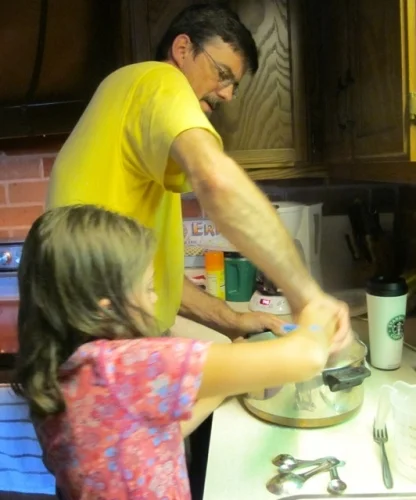
She couldn't concentrate on the work and smile for the camera at the same time. Sunday night pretzels. An Uncle Rich tradition for 20 years and tonight Ellie was assigned the responsibility of helping to make dinner for everyone attending the family reunion.

I grew up as a year around resident in Lakeside, Ohio. It is one of the few existing Chautauqua in the United States and the unique setting definetly shaped who I am today. Reflections of experiencing Lakeside, both as a summer and winter resident in my childhood and as a returning vacationer, has filled many journals.

At our house the "Oh-my-goodness-it's-summer" turns into boredom in about 48 hours. Without a schedule and some resemblance of a routine, my children quickly resort to game systems to fill their days.
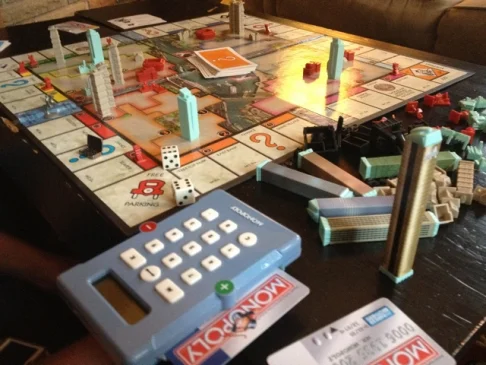
We spent last week with my extended family. My brothers and I are scattered around the United States now, but every year we meet in our home town, Lakeside, Ohio.
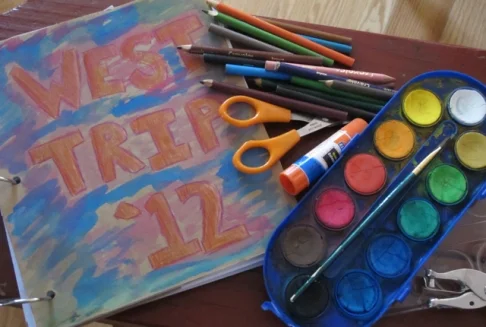
I'm a collector of words. My favorite Pinterest board is full of words and sayings. When I go on vacation, I gather brochures, postcards, maps, and words about the places we're visiting. Usually these go in my suitcase with the best intentions of being transformed into something more creative once I get home.
A few summers ago, I created the "Super Summer Challenge" for my children. Josiah, our 12 year-old, mentioned it one afternoon last week while we were walking. He asked that I create a similar system for him this coming summer. I love it when my children remember of something that worked well in the past and ask for a repeat!

Nathaniel pinched play dough bits off the ball I held out to him. He poked each piece into the Fun Factory press. Diligently and silently, he worked at the task. Once the press was full, he pushed down on the lever. He watched the play dough ooze through the three holes moving blue snakes across the table. For the twenty minutes that he worked, I modeled language on his communication device.